
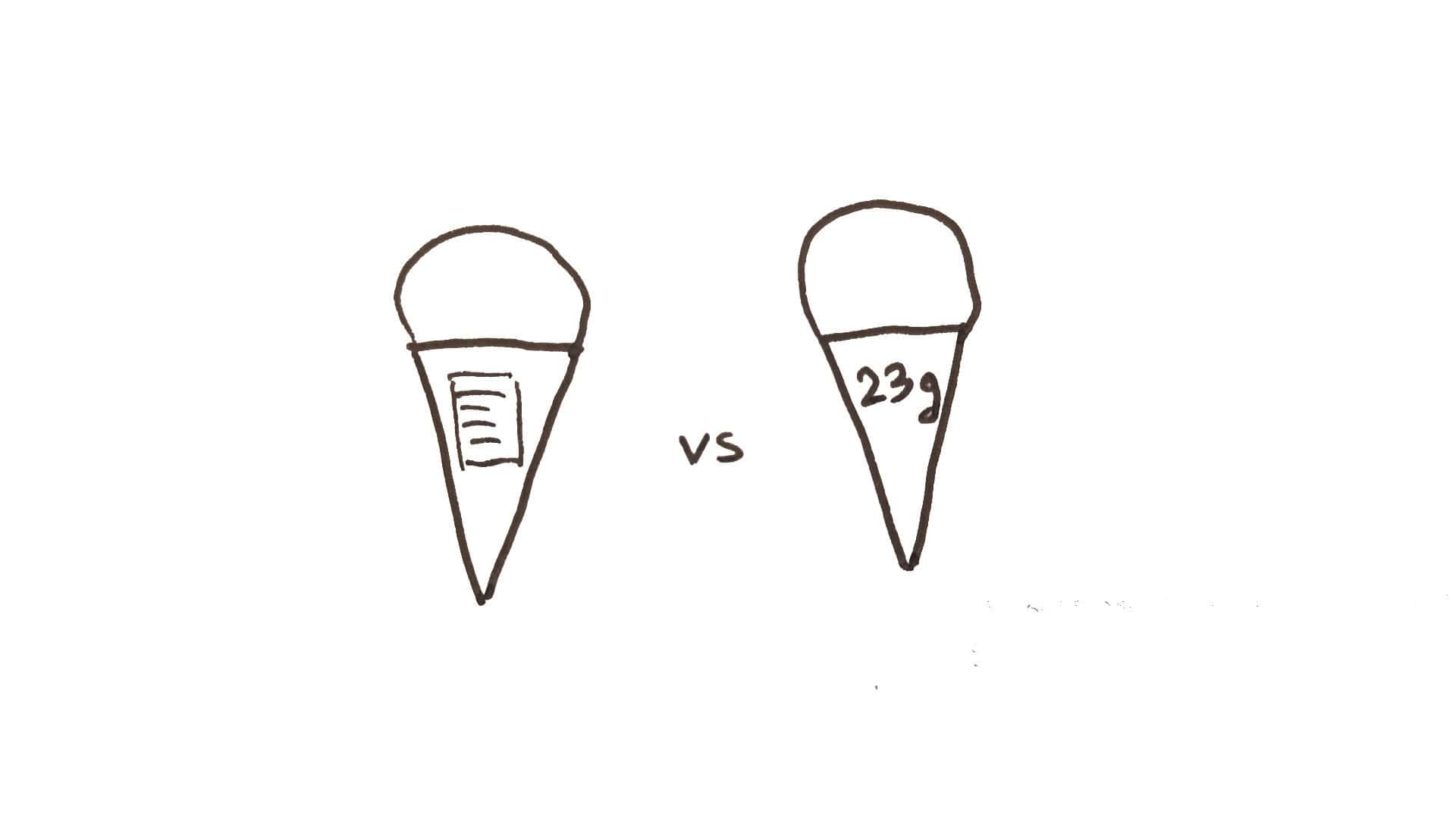
It’s often the case: you have a big, spicy meal, then want to finish with dessert – to put out that fire in your mouth and belly. Juice, milkshake, or ice cream are often the top picks. I chose ice cream. It was from a fairly popular brand in Kerala, which has been claiming real ingredients of late. I had two ice cream sticks. That is when I read the label. This one 50 ml ice cream stick had 23 gm of sugar. I could have casually tossed the wrapper into the dustbin without much thought, but I am currently in the higher range of health consciousness.
I visualized how much 23 gm of sugar would be. I assumed it would be the equivalent of a handful of sugar. I had 2 such hands full of sugar. That led me to these thoughts:
- The problem with nutritional labels is that we don’t visualize them, so this system has to change. If food labels were visual, we’d eat differently. (Read: food brands in India worth knowing)
- And maybe.. numbers don’t change habits. Visuals do.
Years back, I wouldn’t have stopped at just 2 sticks of ice cream. Trying out variety was the rule back then. 4 or 5 different flavours. All at once. Visualize the sugar in that platter of ice cream.
So what is the takeaway from this?
- Visualizing sugar intake before eating something sugary should be your default protocol.
- You would be surprised after knowing the amount of sugar in common “health foods” like boiled rice, orange juice, and smoothies.
- The fact that health-conscious people still end up eating junk food shows that nutrition labels don’t work. Understanding nutrition labels has unnecessarily been made complicated. The key things I would focus on are:
- Total sugars
- Added sugars
- The number of ingredients. I avoid packaged items that list ingredients I cannot understand or that do not sound natural.
- Total calories? Not really.
- If the habit of visualizing teaspoons of sugar in processed food can lead to more mindful eating, what other aspects of our lives can that habit improve?