
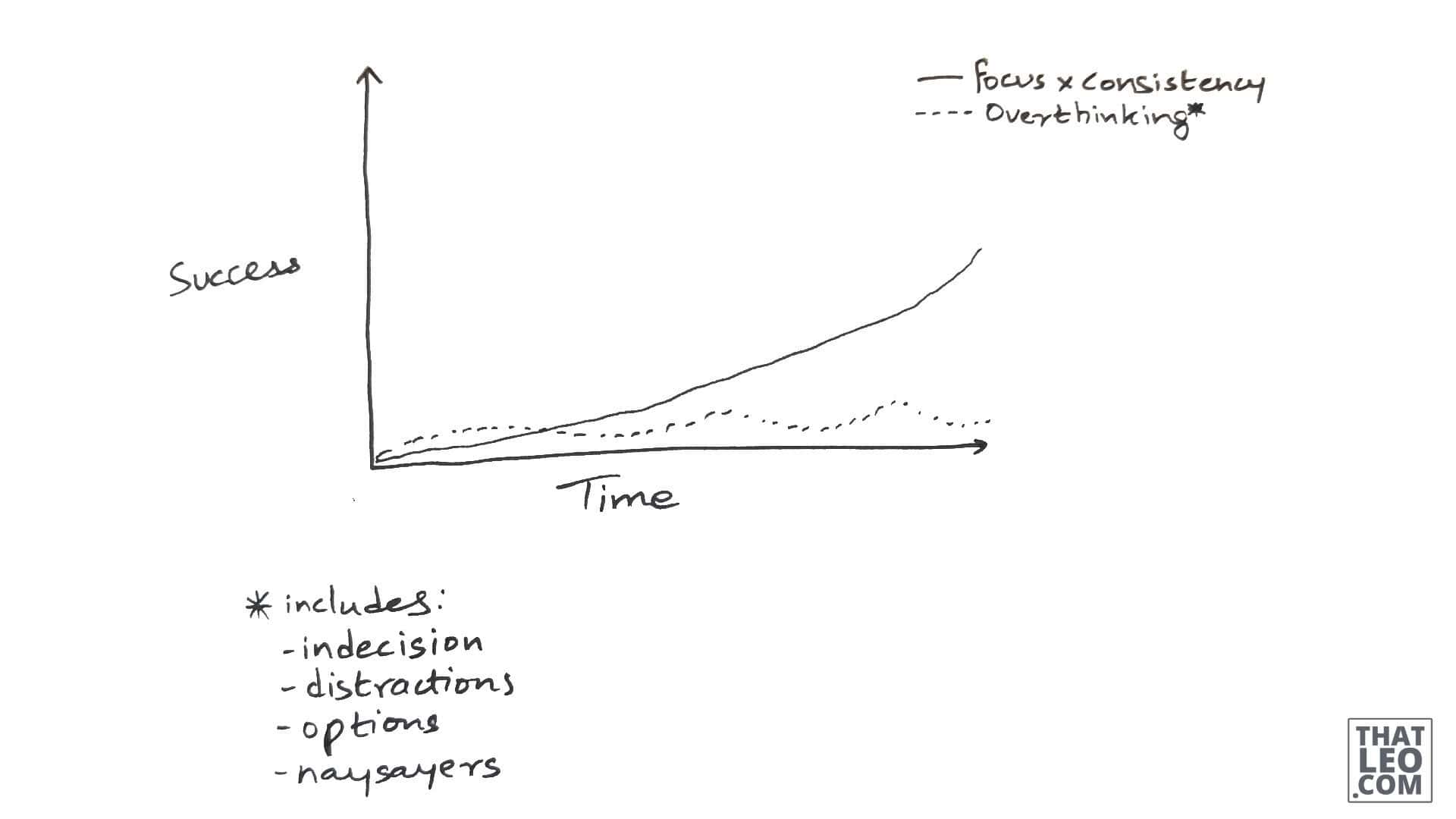
This is also one of the best habits for overall health: Not focusing on what you cannot control. One of the opposite forms of it is:
Overthinking
- Overthinking usually shows up when we stare too long at things we cannot change.
- It feels like we’re “working” on the problem, but most of the time we’re just replaying the same thought on a loop.
- The habit that helps the most is learning to pull your attention away from what isn’t in your hands and putting it back on what is.
What overthinking really is
- Overthinking is thinking without an end point.
- Real thinking leads to a decision, an action, or a clearer view of reality.
- Overthinking keeps you stuck in the same question: What if this goes wrong? What if I had done that instead?
- You feel tired, but nothing actually changed.
What you can control
- A short list:
- What you choose to do today.
- How much effort you put in.
- How you speak to people.
- Where you place your attention.
- How you respond when things don’t go your way.
- This list is small, but it’s enough to build a good life around.
What you cannot control
- Other people’s thoughts and opinions.
- Whether every plan works out exactly how you imagined it.
- Past decisions that are already done.
- Random events, timing, and luck.
- These things still matter, but they don’t respond to more thinking.
Why this habit matters
- When you stop pouring mental energy into what you cannot control, you get that energy back.
- Your mind becomes quieter. You make decisions faster. You feel less like life is attacking you from all sides.
- Instead of fighting reality in your head, you work with what’s in front of you.
How it looks in real life
- Work
- You can’t control who gets promoted next quarter.
- You can control the quality of your work, your relationships, and whether you’re building skills that travel with you.
- Relationships
- You can’t control whether someone likes you in the way you want.
- You can control honesty, respect, and the kind of behaviour you will and will not accept.
- Daily life
- You can’t control every outcome of a choice.
- You can control making one small good choice at a time: what you eat, when you sleep, how much you move.
A small mental check
- When you catch yourself looping on the same worry, ask:
- “Is this mine to solve right now?”
- If yes, do the next small, concrete thing you can do.
- If no, stop feeding it attention and move your mind to something useful.
- This is a skill. You won’t get it right every time, but that’s fine. The habit is the important part.
Caring about the right things
- Letting go of what you can’t control is not the same as not caring.
- You still care about outcomes. You still try.
- You’re just being more accurate with your attention: you spend it where it has a chance to make a difference, not where it only creates stress.
To put it simply
- One of the best habits you can build is to stop trying to mentally manage every part of life.
- Focus on the small set of things that are actually yours to handle.
- When you do that, overthinking has less room to grow, and life quietly becomes easier to live.
We all need somewhere to channel our overthinking. For me, that’s a collection of short notes and observations on living better. How can you channel your overthinking?